

Blog

The Anatomy of a Healthy Roof
Technical markers of a storm-ready home in Southwest Florida
A roof does two jobs at once. It keeps water out, and it holds its shape under wind pressure. When it stays dry and tight through a storm, it is rarely “luck.” It is layers, details, and clean installation.
I look at roofs the way I look at structures. I want load paths, tight connections, and water management that still works after years of sun and salt air.
Below are the technical markers I check when I’m judging whether a home is storm-ready.
Marker 1: A strong roof deck that feels solid underfoot
The roof deck is the base that every other layer depends on. A healthy deck stays flat, dry, and firmly attached to the framing.
What you can spot from inside or from the attic:
Dark stains or streaks under valleys, chimneys, or vents
Soft plywood edges or a “spongy” feel in a few areas
Rusted fasteners or damp insulation near the roofline
If the deck has repeated moisture cycles, it loses stiffness. That shows up as sagging lines, uneven tile seating, and new leaks after heavy rain.
Marker 2: Water control that starts before shingles or tile
Most homeowners think the roof covering does all the waterproofing. It does not. Underlayment and flashing do the heavy lifting when wind-driven rain hits.
A storm-ready system has:
A quality underlayment installed with clean overlaps and sealed transitions
Reinforced protection at valleys, edges, and penetrations
Flashing that directs water onto the roof surface, not behind it
If a roof leaks around a pipe boot or wall line, the covering often gets blamed. The root cause is usually a weak detail underneath.
Marker 3: Flashing that looks boring and stays that way
Flashing is not decorative. It is engineered water routing. It should sit tight, stay sealed, and show no gaps at joints.
Red flags you can see from the ground:
Caulk blobs used as “patches” around chimneys or pipes
Metal edges that look wavy, lifted, or stained
Step flashing that disappears behind siding with no clear termination
Good flashing does not need constant resealing. When you see repeated patchwork, plan for a deeper fix.
Marker 4: Clean roof edges that resist wind lift
Roof edges take a beating in storms. Wind grabs corners and rakes first. A healthy roof has tight edge detailing and a clean line.
Look for:
Straight drip edge lines with no visible gaps
No “flutter” sound at the edge on windy days
No missing starter materials at the perimeter
If shingles curl at the edge or tiles rattle after wind, the roof is telling you something.
Marker 5: Penetrations that are sealed like they matter
Vents, stacks, skylights, and wall tie-ins are leak hotspots. A storm-ready roof treats penetrations like a priority, not an afterthought.
Common failure signs:
Cracked rubber boots
Loose storm collars
Stains on ceilings near bathrooms, kitchens, or laundry rooms
Small leaks that “only happen in hard rain”
Hard rain pushes water sideways. That exposes weak seals fast.
Marker 6: Tile roofs that sit tight and drain correctly
Tile is durable, but it is not “set it and forget it.” The system relies on correct fastening, proper underlayment, and clean drainage paths.
Healthy tile roof signs:
No visible lifted corners or shifted rows
Valley lines stay clean and open
Flashing at walls and penetrations stays tight
No recurring cracked tiles in the same area
Cracked tiles happen, but patterns matter. Repeated breaks can point to movement, poor support, or a stressed deck.
Marker 7: Ventilation that keeps heat and moisture in check
South Florida heat punishes roofs. Poor ventilation traps heat, bakes materials, and raises attic moisture.
What you may notice:
High attic temps that stay hot well after sunset
Musty odors in the attic
Premature shingle aging, curling, or blistering
Mold growth on wood surfaces
Ventilation is a system, not a single vent. Intake and exhaust must work together.
Marker 8: Gutters and drainage that move water away fast
A storm-ready roof still fails if water pools at the edge or dumps where it should not. Roof drainage protects fascia, soffit, and even foundations.
Check for:
Overflow marks or water stains at fascia boards
Erosion lines under roof valleys
Gutters pulling away or sagging at seams
Downspouts that discharge right at the slab edge
Water management is structural protection. It saves more than the roof.
Marker 9: A roof history you can track
A healthy roof has clear records. You know when it was installed, what system was used, and what repairs happened.
Ask these questions once a year:
What was the last major repair, and where was it?
Has the roof had leaks after storms?
Were repairs done as a full detail fix, or a surface patch?
The answers tell you if you have a roof system, or a series of temporary fixes.
A simple homeowner checklist after any storm
You do not need to climb on the roof. Walk the exterior and interior and look for changes.
Outside:
New debris patterns on the roof
Missing pieces at edges or ridges
Tile movement or cracked clusters
New staining on soffits or fascia
Inside:
Ceiling discoloration
Damp smells in closets near exterior walls
Attic stains near vents or valleys
If you see changes, book an inspection quickly. Small issues spread fast in this climate.
Why VACA is a smart next step
A storm-ready roof comes down to details. VACA Construction & Roofing focuses on the parts homeowners do not see, since those parts decide how the roof performs in real weather. You get clear findings, photos you can understand, and a plan that matches your home and budget.
If your roof is aging, storm-worn, or you just want a straight answer, book a free inspection here: Book a Free Roof Inspection
You can also learn more about how VACA works and where we serve:
Ask about the $1,000 off offer when you schedule. It’s limited and available only in Southwest Florida.
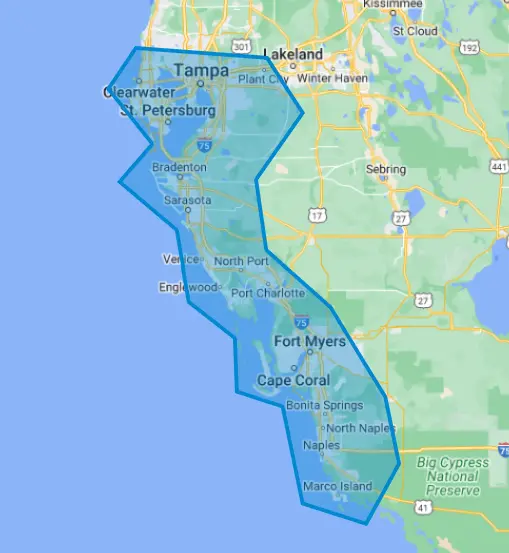
Serving Southwest Florida
We commonly serve these areas:
- Bonita Springs
- Cape Coral
- Captiva
- Estero
- Fort Myers
- LaBelle
- Lehigh Acres
- Longboat Key
- Manatee
- Marco Island
- Naples
- North Port
- Port Charlotte
- Punta Gorda
- San Carlos Park
- Sanibel Island
- Sarasota
- Siesta Key
- Venice
Let's Build Somthing That Lasts
Schedule a free inspection or consultation.
